
Compaction transforms powders into solid products that are easier to handle, transport, and store. It also improves the density, stability, and quality of the final product.
Many materials can be compacted : metal, mineral, chemical, food, and pharmaceutical powders. Since each material behaves differently, testing is often required to determine the most suitable process.
Compaction is particularly useful when powders : generate dust, are difficult to handle, take up too much volume, present transportation or storage issues, or need to be recovered or recycled.
Compaction is a general term that encompasses all processes used to transform a powder into a solid product.
Agglomeration consists of compressing a powder between two rolls, generally without adding a binder, to form flakes, pellets, or denser agglomerates.
Granulation is a complementary step that consists of transforming these flakes into uniform granules through crushing and sizing.
Compaction therefore includes different techniques depending on customer needs and industrial applications.
Roller presses compact powders using two rolls rotating in opposite directions. The material is first fed and pre-compacted, then progressively compressed up to the contact point between the two rolls, where the pressure is highest. This action transforms the powder into agglomerates, briquettes or compacted sheets depending on the chosen configuration. The process is controlled by several parameters, such as wheel speed, material feed, and hydraulic pressure, in order to achieve a result adapted to the characteristics of the processed product.
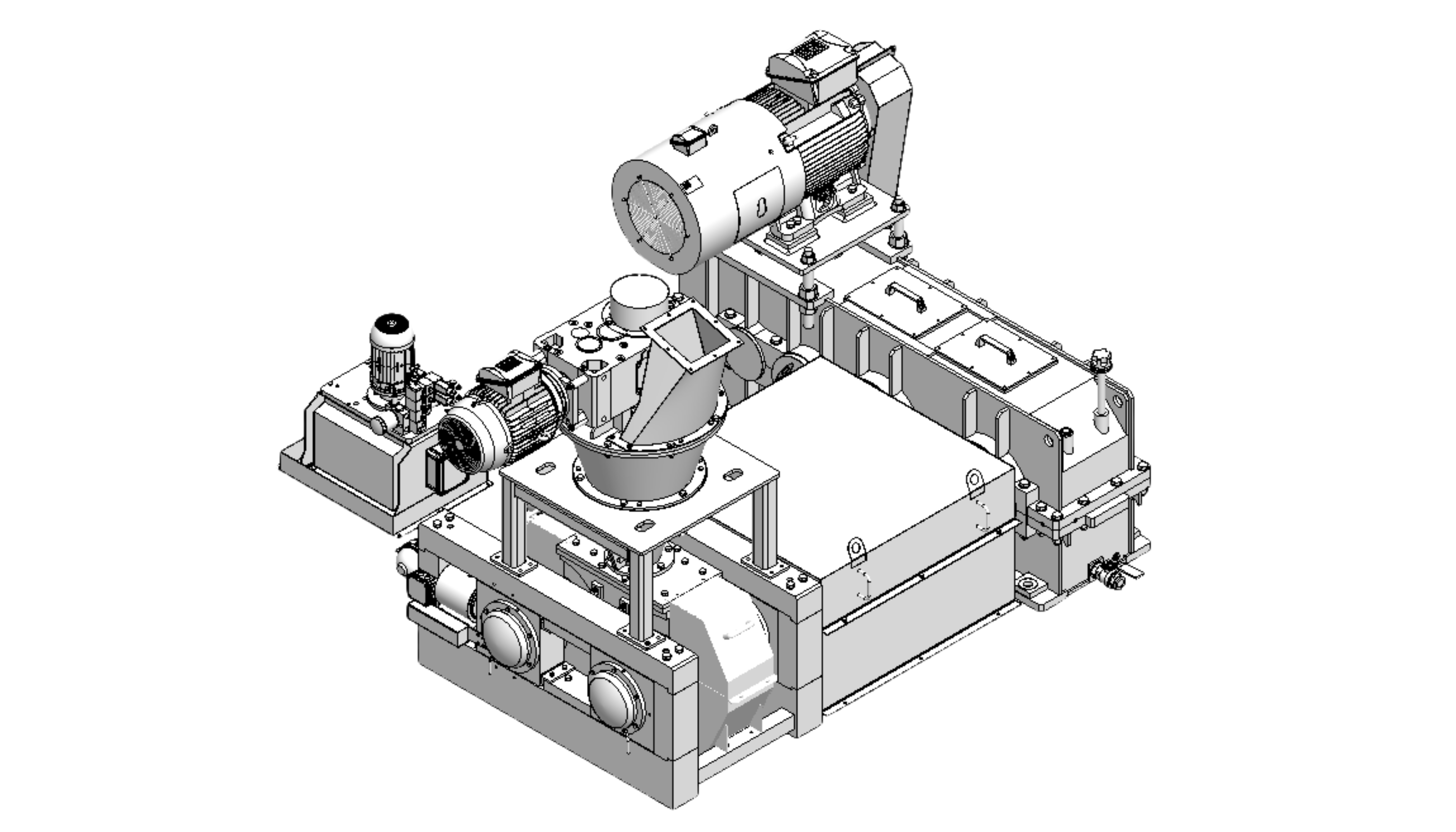
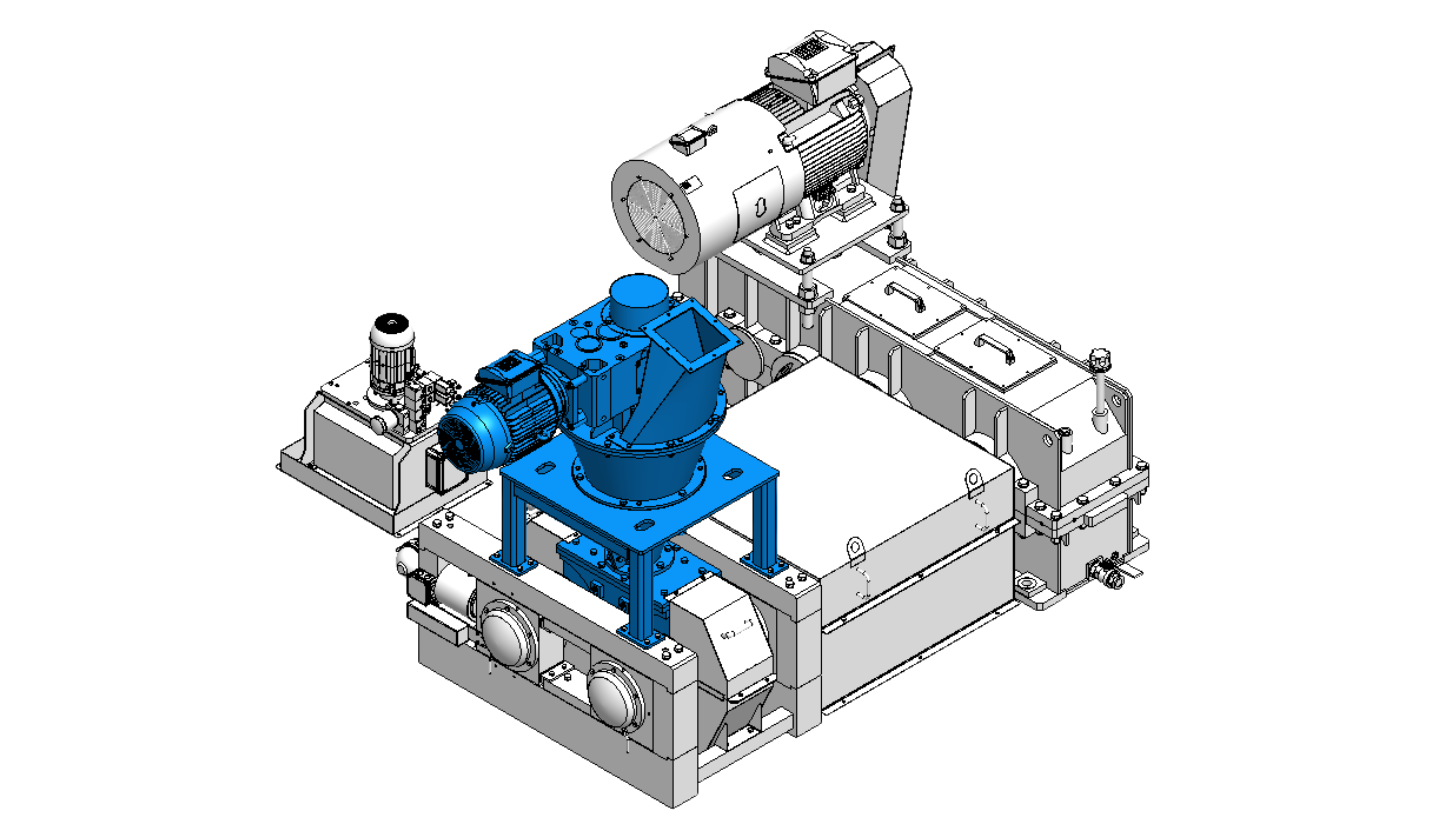
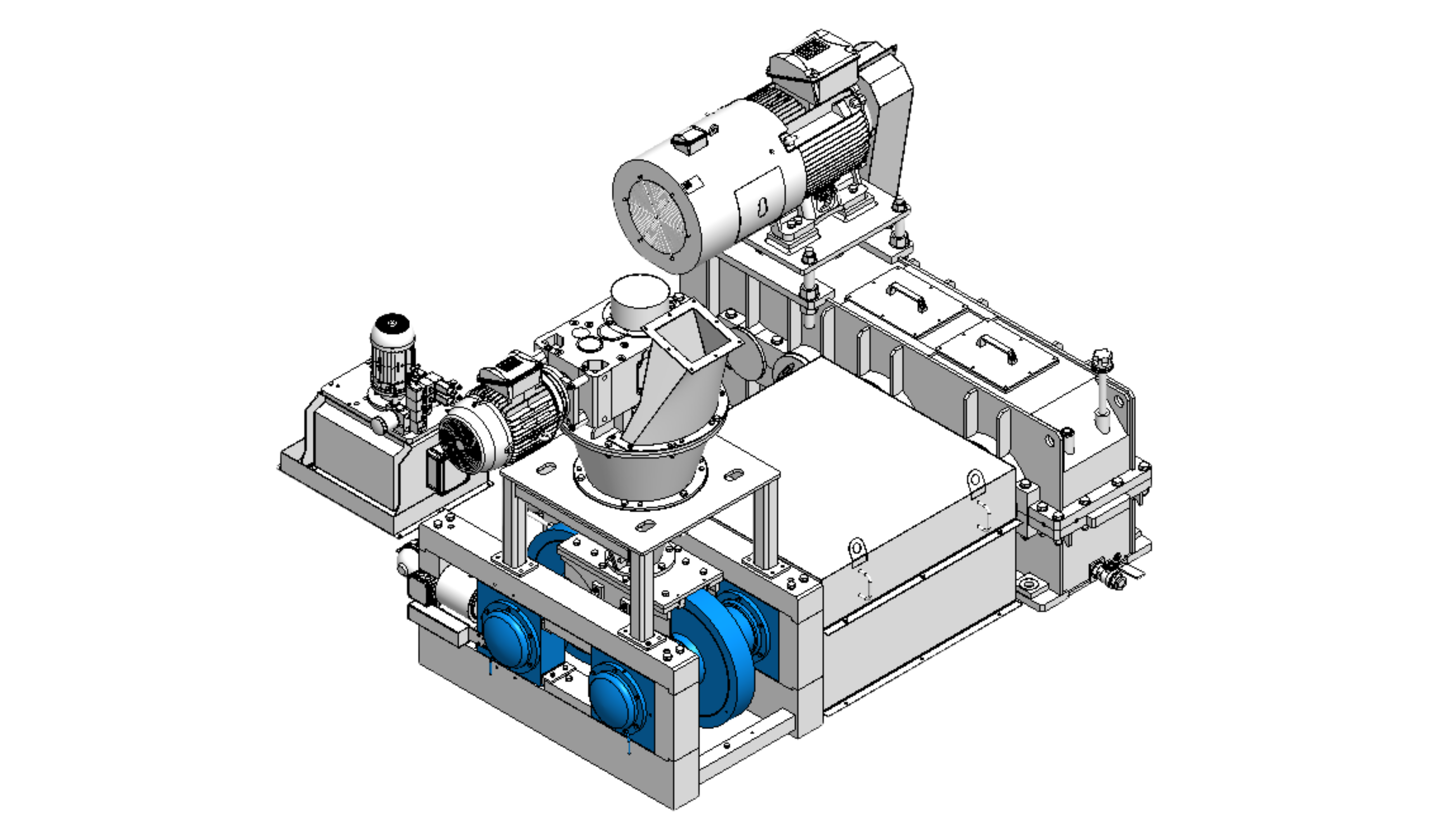
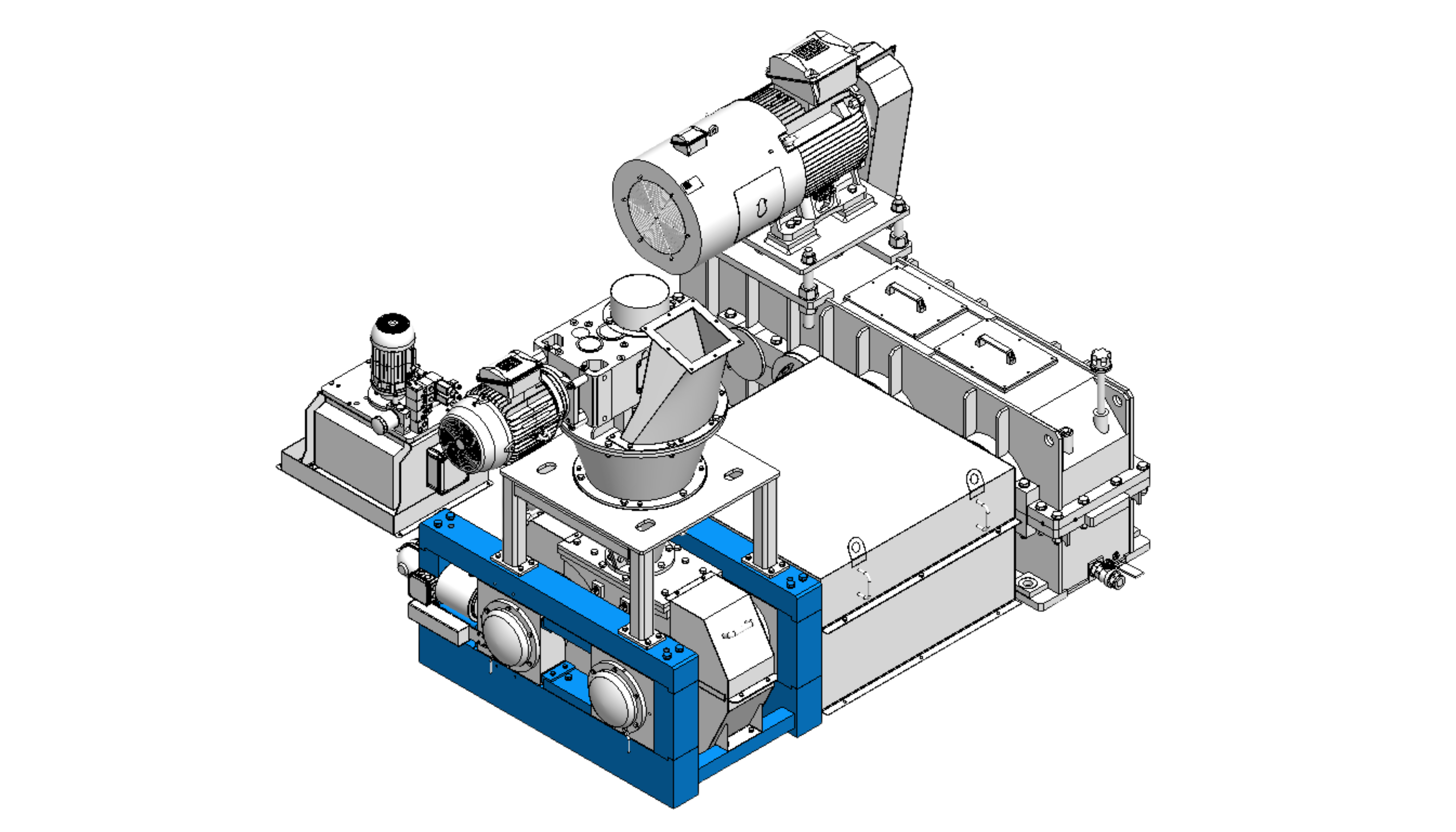
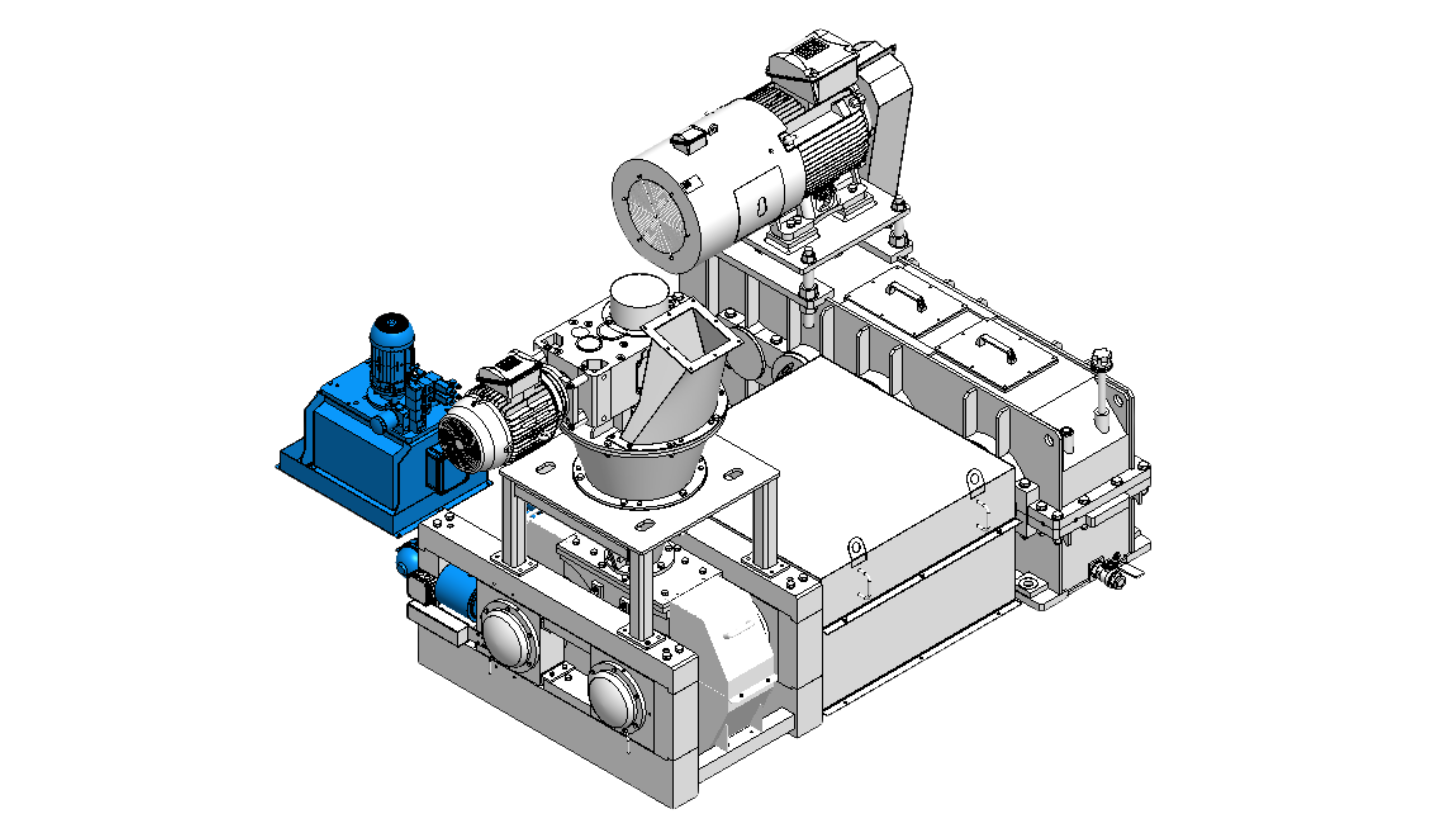
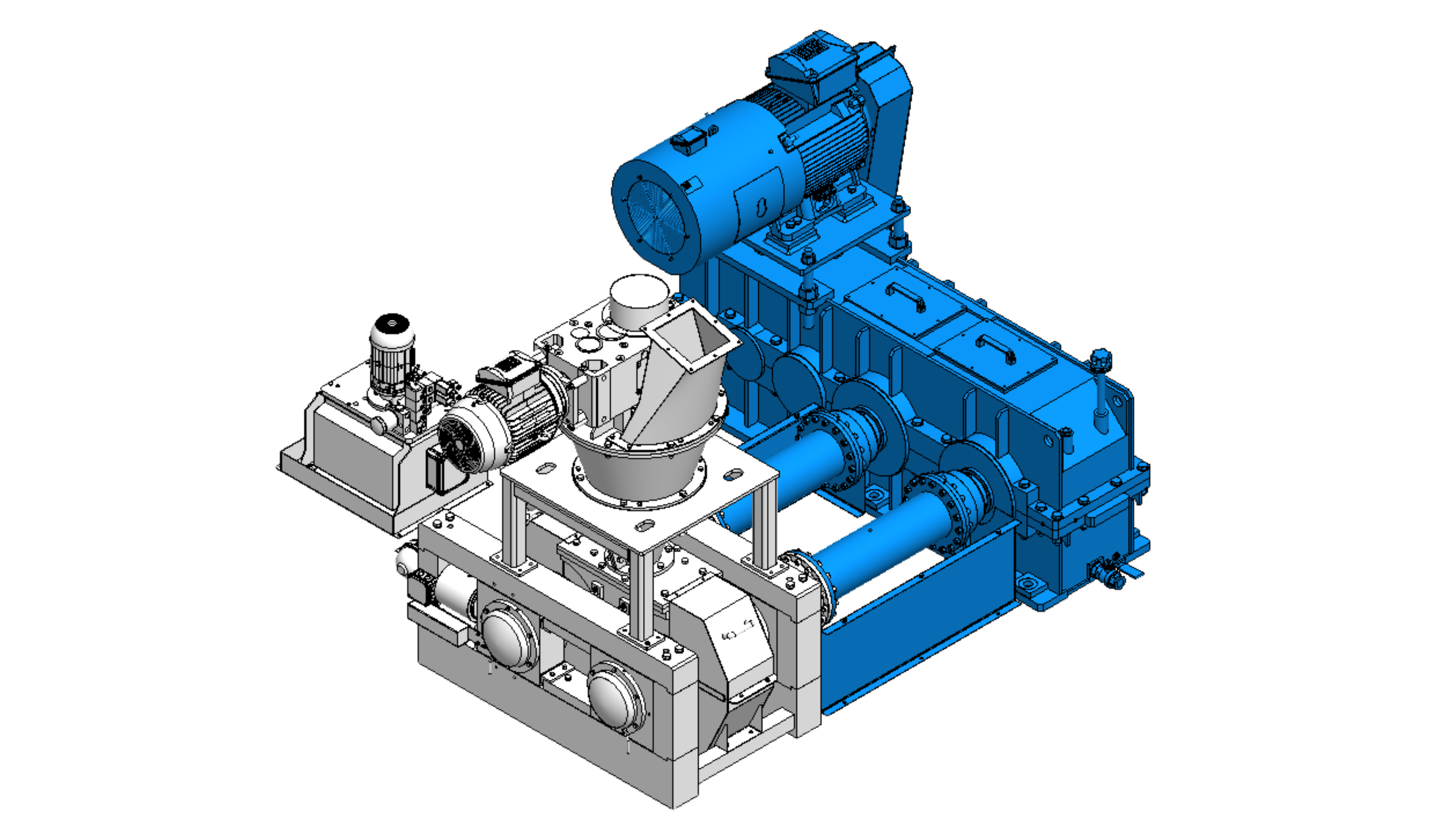
Dynamic view of a roller press
Sahut-Conreur dry compaction technology offers several advantages : no drying required, reduced energy costs, simplified process, direct recycling of fines within the process, no liquid effluents, and improved industrial control.
Granulation allows you to : improve flowability, reduce dust, obtain a homogeneous product, and facilitate use, dosing, and storaged.
Not always. Many powders can be compacted without a binder thanks to the pressure exerted by compactors. In some cases, a binder may be added to improve the mechanical strength of the final product.
Testing makes it possible to verify the technical and financial feasibility of a project. It is also used to : optimize process parameters, validate the quality of the final product, and reduce risks before industrial investment.
Around twenty liters may be sufficient for laboratory tests, depending on the case.
This depends on the objectives. Feasibility tests on laboratory presses can sometimes be carried out within a single day. More extensive tests may require several days or even several weeks in the case of a production campaign.
Material databases exist, but only testing can accurately assess the specific behavior of a powder.
The cost depends on many factors : required throughput and capacity, nature of the powder, process complexity, expected characteristics of the final product, and level of automation. A preliminary study helps refine the budget.
SAHUT-CONREUR installations cover a wide capacity range : from a few tens of kg/h (laboratory tests) to more than 50 tons/hour in industrial production, depending on the material processed.
An expert helps optimize parameters, reduce risks, and ensure a reliable and high-performance result.
Yes. SAHUT-CONREUR has the expertise required to design and supply complete lines integrating the entire process : dosing, mixing, compaction, granulation, screening, recycling of fines, and automation.
Compaction and granulation transform fine powders into denser and more stable products (briquettes, granules, or flakes). This significantly reduces dust emissions and improves handling and storage conditions.
By increasing its density through compaction, the product takes up less space, becomes less fragile, and is easier to handle, store, and transport. This also makes it possible to significantly reduce logistics costs (containers, trucks, big bags).
Compaction contributes to sustainable development by enabling : reduced dust emissions, reduced material losses, optimized transport through reduced volume, valorization of by-products, recycling within original processes, and reduced disposal costs.
SAHUT-CONREUR operates in France and internationally, supporting industrial projects thanks to its recognized expertise in powder processing and its commercial network.
SAHUT-CONREUR was founded in 1859 by Alfred Conreur and benefits from extensive experience in the design and manufacturing of industrial equipment.
SAHUT-CONREUR builds on more than 160 years of experience in the design of industrial equipment for powder processing. The company brings together all the required expertise on a single site : engineering office, in-house manufacturing of key equipment, a full workshop, an R&D center, and a testing station with analytical capabilities. This integrated organization enables efficient support for tailor-made projects both in France and internationally.